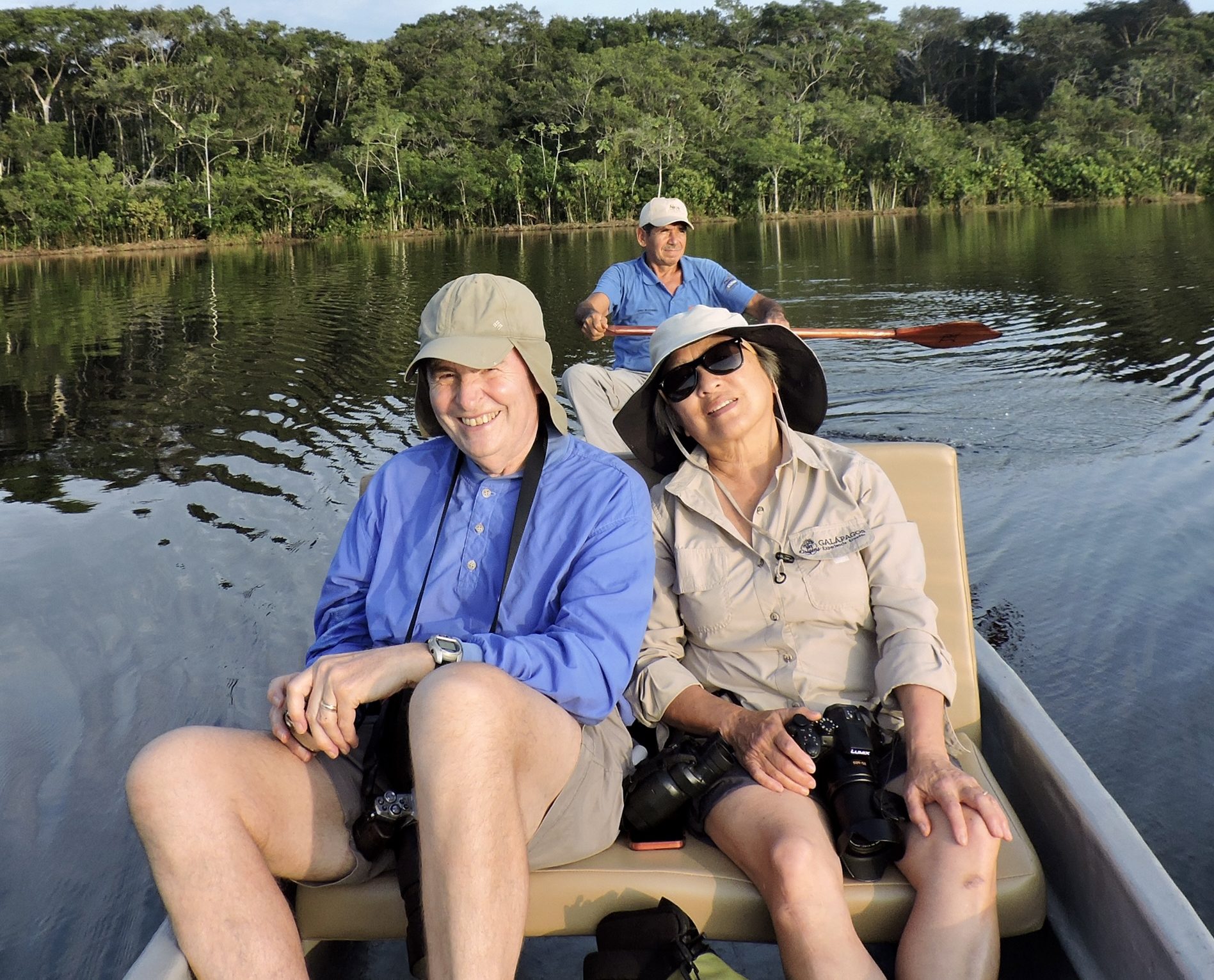

I have been dreaming of visiting the Galápagos Islands for years. but nothing prepared me for the dramatic landscapes, the unique flora and fauna on land and underwater.
These islands largely remain in the same state that Charles Darwin first encountered them in 1835. With the exception of San Cristobal, the islands are sparsely populated and are now protected as a National Park.
Galápagos Islands
Situated in the Pacific Ocean some 1,000 km from the South American continent, these 19 islands and the surrounding marine reserve have been called a unique ‘living museum and showcase of evolution’. Located at the confluence of three ocean currents, the Galápagos are a ‘melting pot’ of marine species. Ongoing seismic and volcanic activity reflects the processes that formed the islands. These processes, together with the extreme isolation of the islands, led to the development of unusual animal life – such as the land iguana, the giant tortoise and the many types of finch – that inspired Charles Darwin’s theory of evolution by natural selection following his visit in 1835. https://whc.unesco.org/en/list/1/
Description is available under license CC-BY-SA IGO 3.0
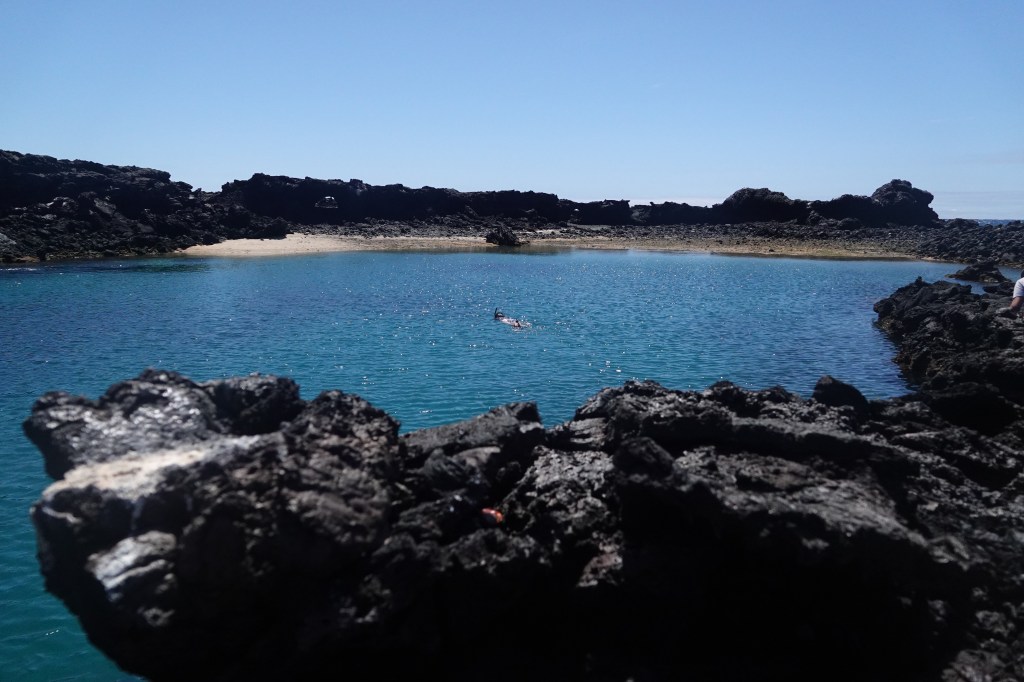
Galapagos landscapes are stark. Black contrasts with white. Seas are black purple and turquoise green. Plants can be lime to emerald green— all colours shimmer in intensity against the strong equatorial sunlight.
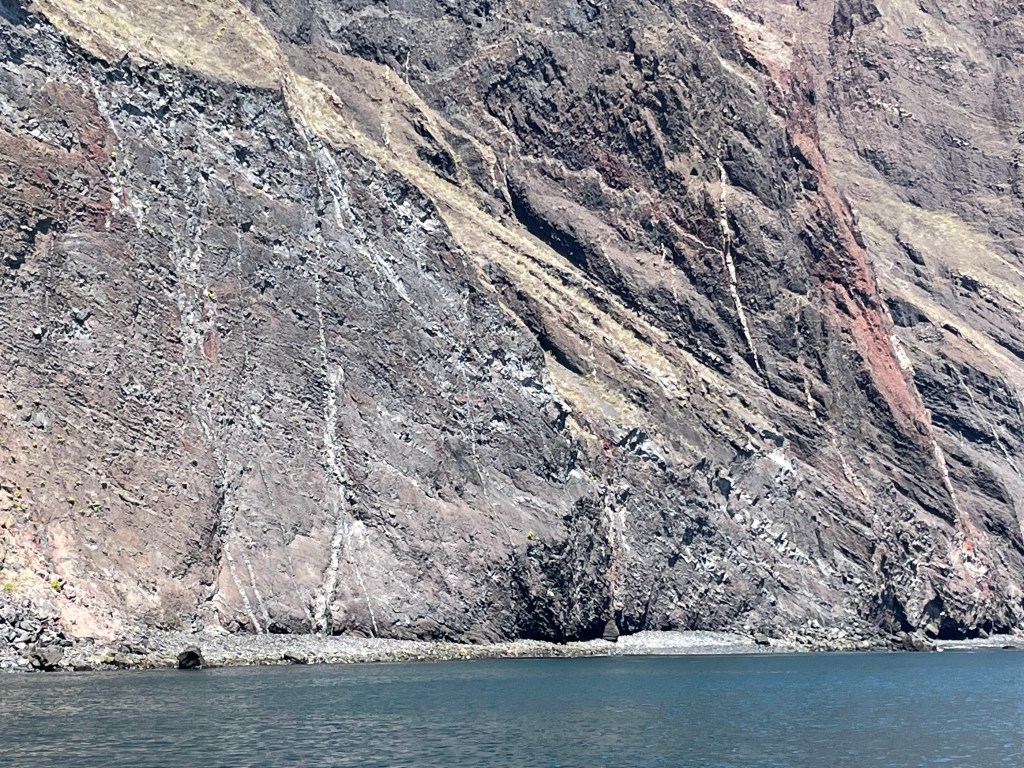
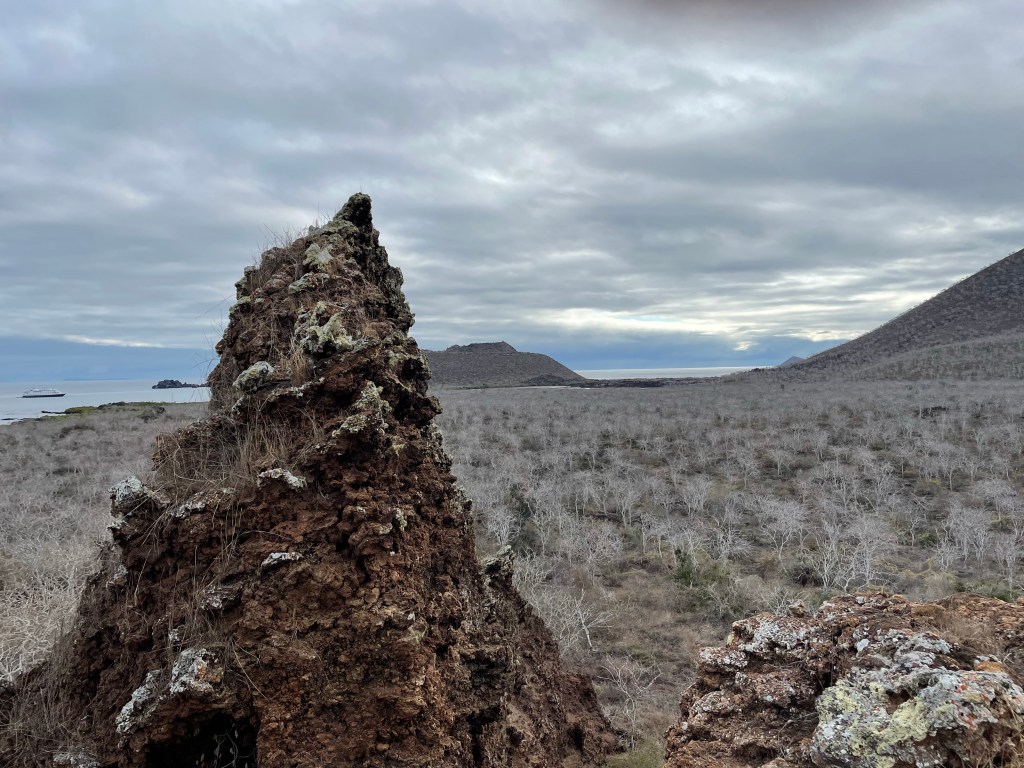
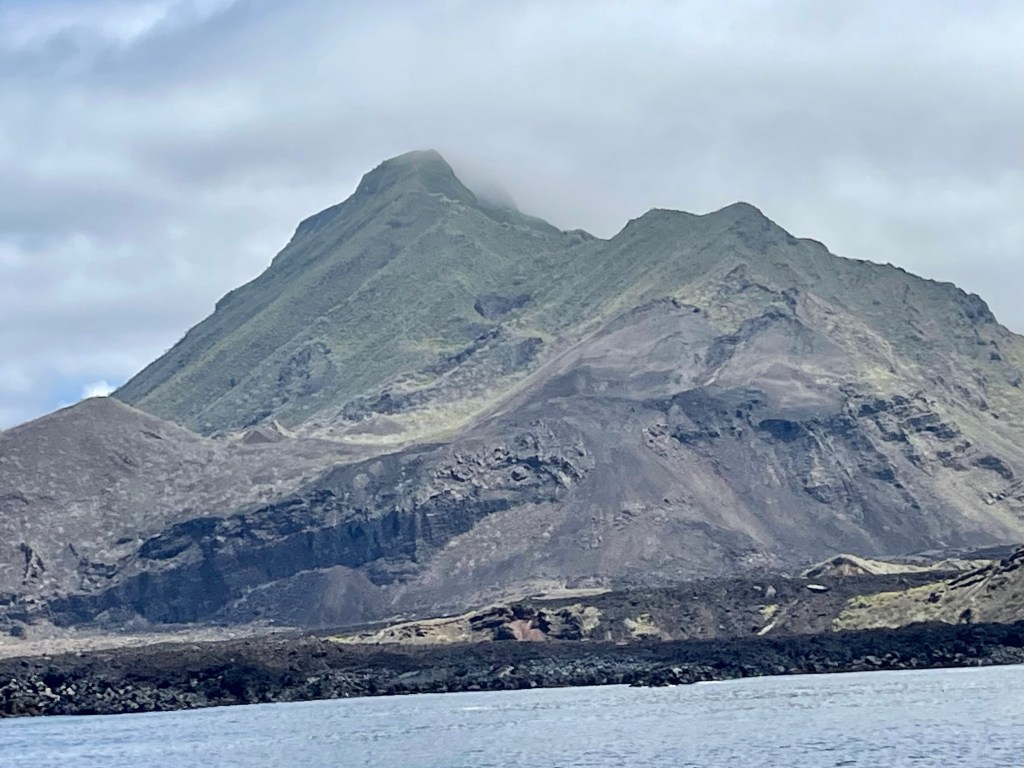
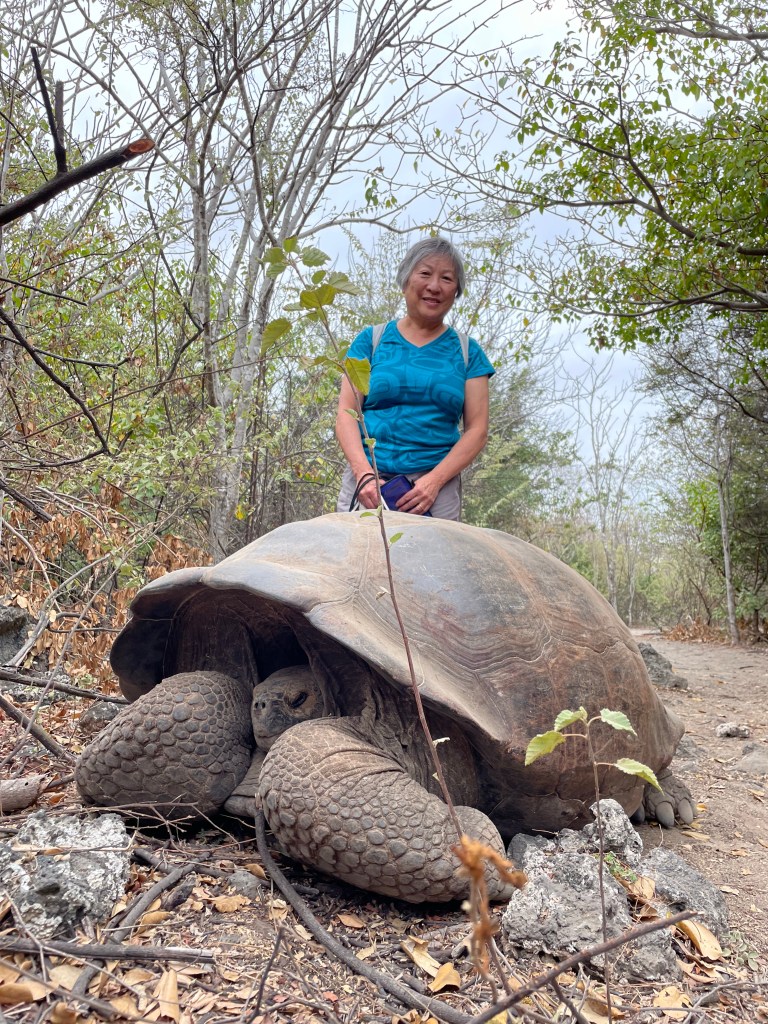
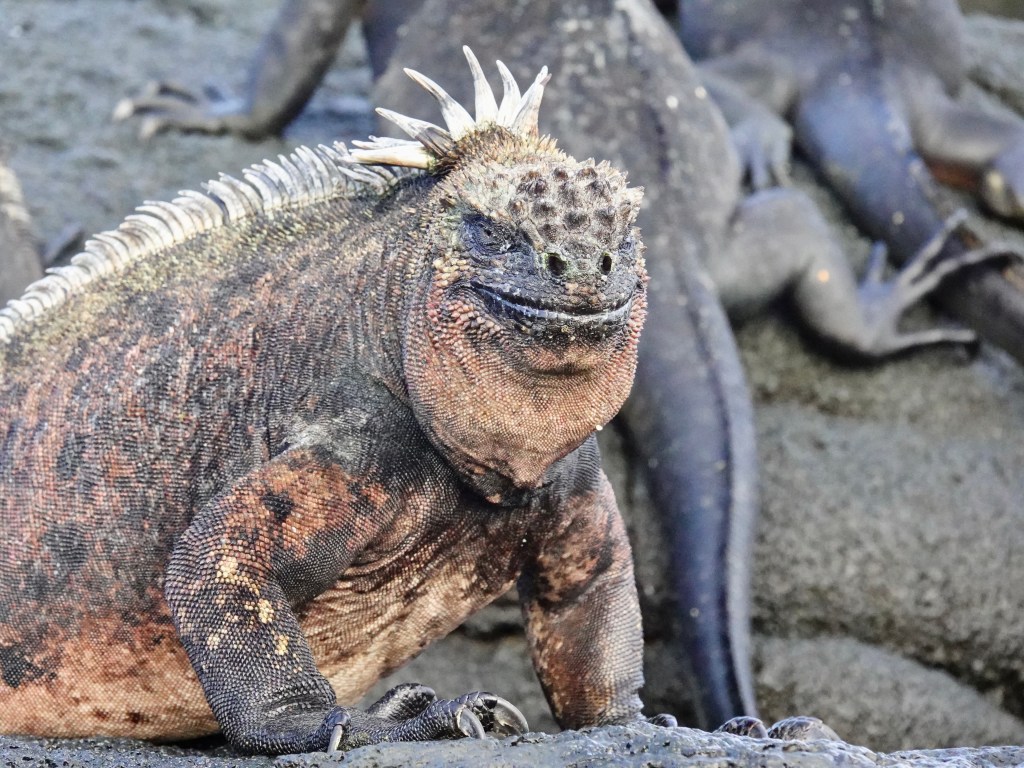
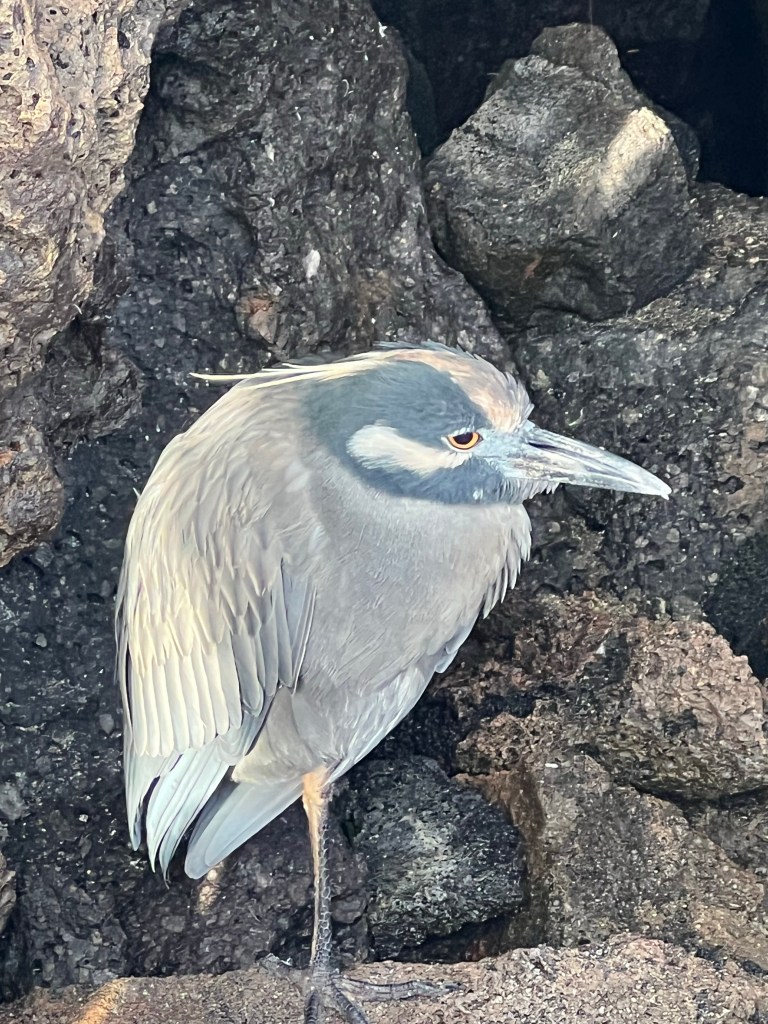
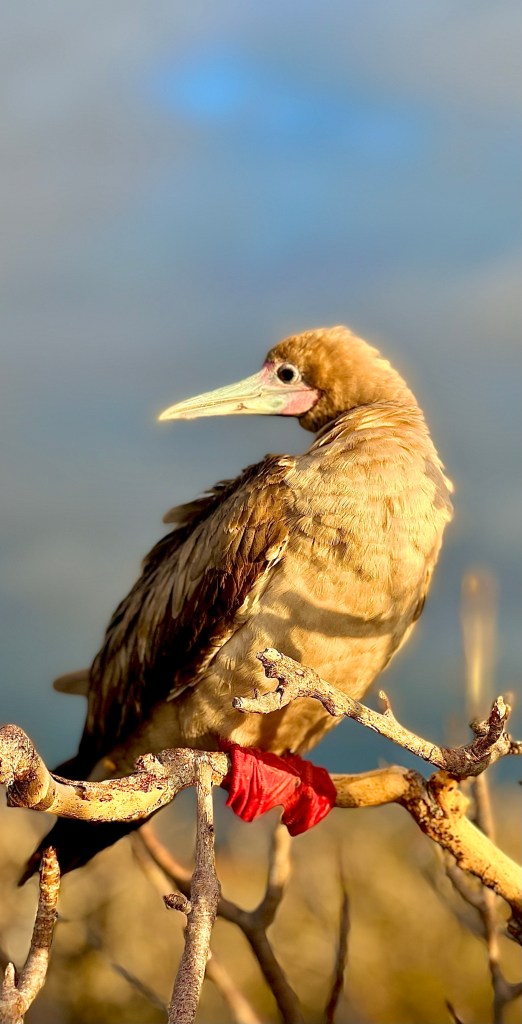
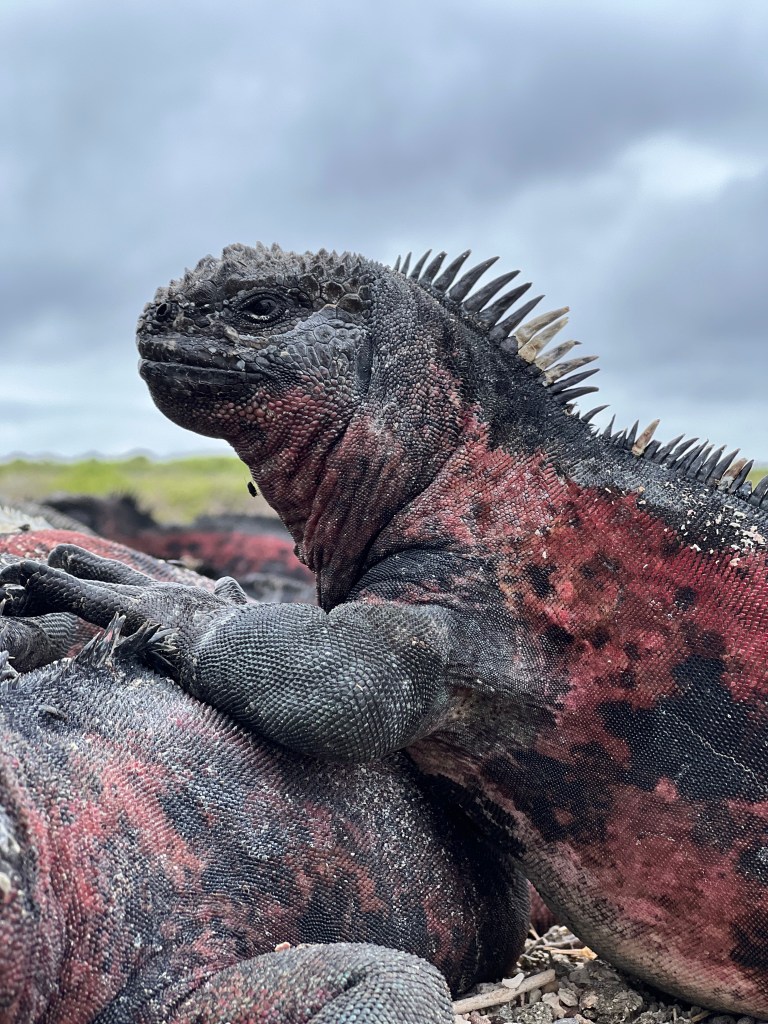
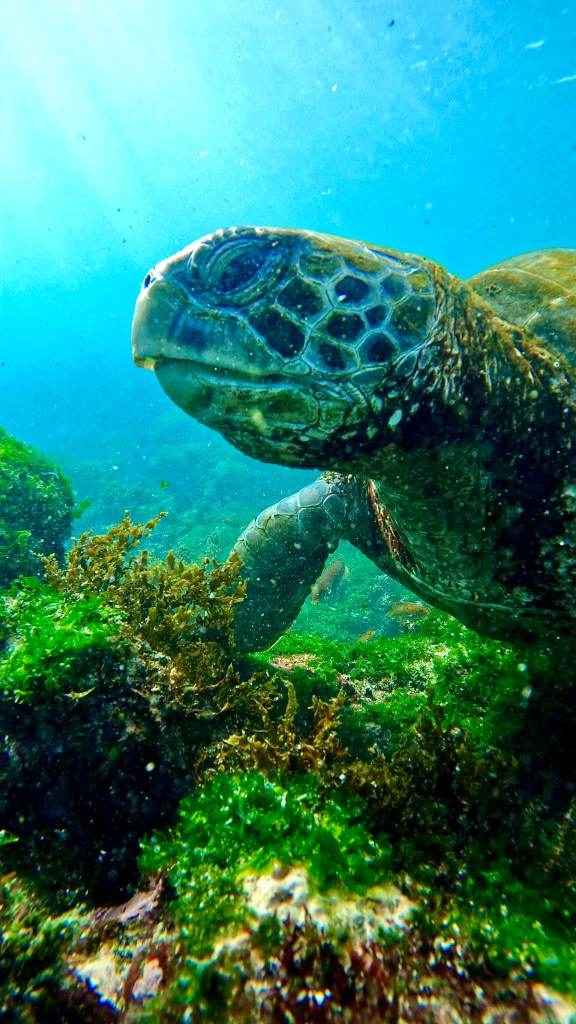
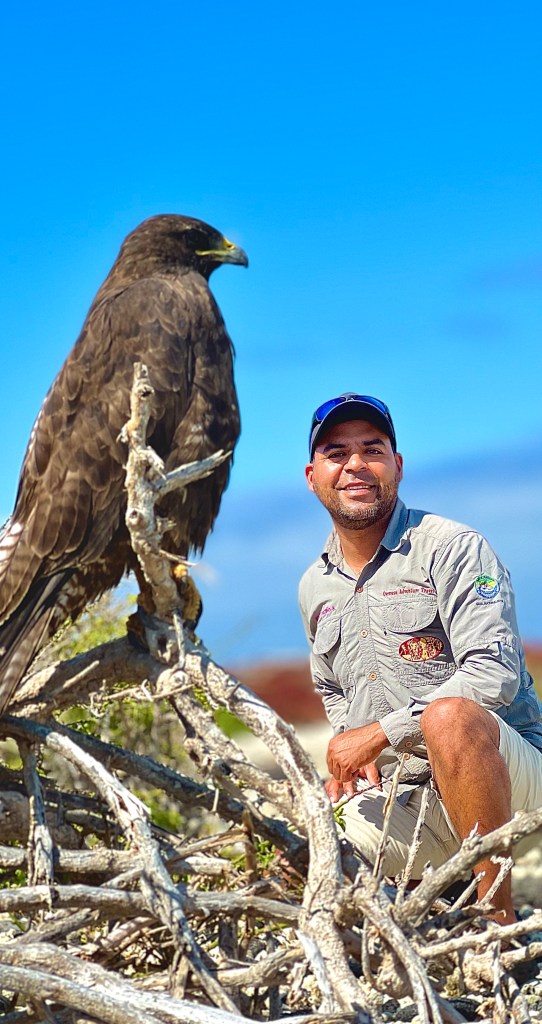
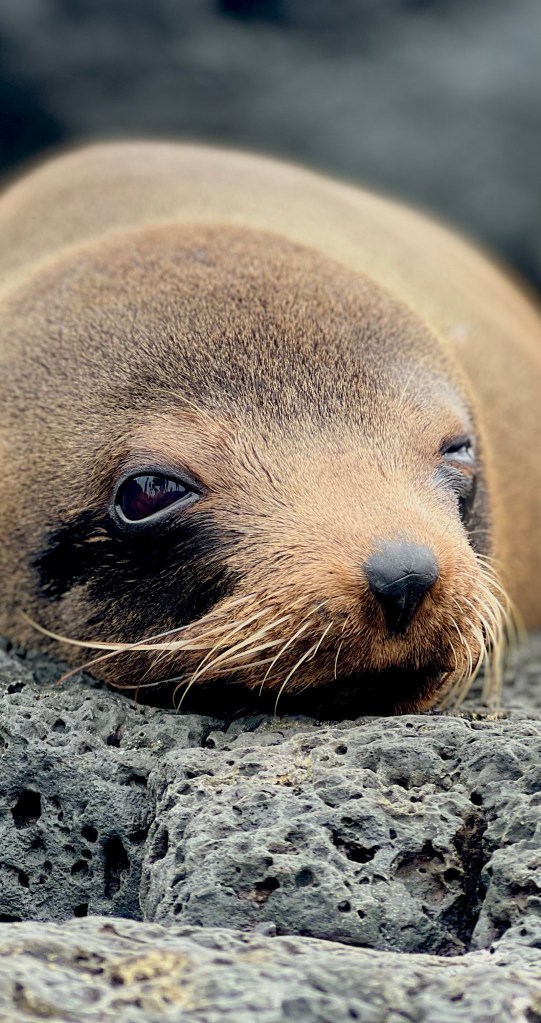
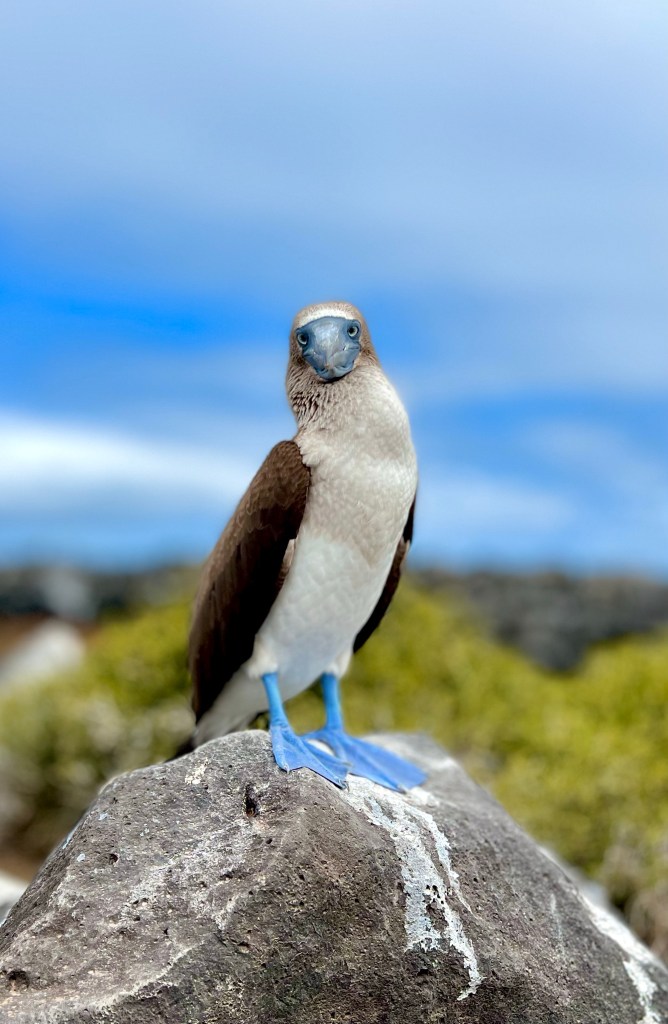
The birds and sea life that we saw also tended to extremes. The ecosystems in the Galapagos tend to produce “giganticism” in living species we were told. The largest species of turtles and iguanas, for example. we heard the term, “endemic” constantly referring to species found only in the Galapagos.
 Travels and Adventures of JoAnne and Gordon